Artist: Milburn
Album: Well Well Well
Year: 2006
Label: Mercury Records
The fortunes of two Sheffield quartets, Arctic Monkeys and Milburn, are inextricably linked. It's perhaps not entirely foolish to suggest that if it had been Milburn who released their debut album at the start of 2006, as their Arctic compatriots did, then they could have been the ones riding on the euphoric indie wave of the mid-noughties. Indeed, it could, and probably should have been Milburn who released their record first. The band formed a year prior to the Monkeys, released their first demo two years earlier and their stock was such that they even invited Alex Turner and co. to support them on a 2005 tour.
Although the reasons why their debut album was allowed to take so long may be forever buried beneath other tales surrounding the Sheffield music scene, a critical reappraisal of Well Well Well suggests that it could simply have been a case of the right album at the wrong time. By October 2006, when the album was finally released, the country was consumed by Monkey-mania, with the Arctics getting ready to record their second album as fully-fledged superstars. Well Well Well did trouble the bottom end of the UK charts, at number 32, but by that point they may well have been seen by many outside of Sheffield as cheap imitators of their counterparts.
But enough of all the what ifs. The record itself draws immediate comparisons with Whatever People Say I Am, That's What I'm Not, but it should be reviewed on its own considerable merit. The title track is a barnstorming opener, as lead singer Joe Carnall snarls Well well well/Look at what the cat dragged in to a backdrop of furious guitars and pounding drums. Carnall recently opened his sold-out Christmas set at The Leadmill with the number, which shows its enduring appeal within his home city. The punchy Send in the Boys follows, with Carnall's catchy lyrics and likeable, Sheffield-afflicted voice soon coming to the fore.
Most of the tracks on the record follow a familiar, sub-three minute format, but it's always executed with a skill and songwriting craft that defies the young age of the songwriter: Carnall was just 18 years old when the album was released. Although the band clearly excel in this area, it is perhaps their lack of ambition which meant they never quite lived up to their early potential. Despite this, the quality of the album should, once again, be reiterated. In the midst of the plethora of indie bands that appeared in the mid-noughties, few were as tight, melodic and lyrically proficient as Milburn.
In the end, the differences between Well Well Well and Whatever People Say I Am are small yet decisive. Turner's lyrics are sharper, the choruses are more explosive and the musicianship is that little bit better. But that shouldn't take away from what is a remarkably accomplished debut album from a band who could, and probably should, have had so much more time to grow together. They disbanded in 2008, shortly after the release of their equally impressive second album.
Follow @AlbumAWeek
To be the first to hear the latest album of the week on the blog, simply enter your email address in the box to the right (and up a little!) of here.

New music blog covering indie, alternative, hip-hop, reggae and, well, pretty much anything actually.
Sunday, 19 January 2014

Sunday, 12 January 2014
Album of the Week #8
Artist: Ugly Duckling
Album: Journey to Anywhere
Year: 2001
Label: XL Recordings
There are often clear points of reference when you're trying to place the era of a piece of music- the sound itself, the production and the (sometimes questionable) fashion of the artist all tend to be good starting points. Listen to an early Kinks album and you could pretty much imagine what they look like, where they're from and what year the record was released in - not that that's a bad thing! Similarly, listening to a Human League record screams 'THE 1980s!!' from the first few bars: a glance at their definitely questionable fashion choices merely confirms it.
But some groups manage to defy this notion. Unique artists such as Bowie or The Beatles transcend time and sound by releasing music that sounds current and fresh whenever it's heard, whilst Television's 1977 album Marquee Moon is essentially 2001's Is This It pumped full of steroids. Other artists tend to go the other way. Despite releasing their debut record in 2012, The Allah-Las' music sounds so quintessentially 60s that the invention of time travel suddenly seems a very realistic possibility. Although the jump in time isn't quite so drastic for Ugly Duckling, the idea remains the same.
An album that's firmly rooted in the late 80s golden era of hip-hop but released in 2001, Journey to Anywhere is like the lovechild of 3 Feet High and Rising and Midnight Marauders. It retains the hallmarks of its forefathers - namely heavy sampling and scratching - and fittingly, the style of the record can be ascertained from the sampling involved. Alongside the staple James Brown sample, Ugly Duckling also plunder from the likes of Junior Mance (Jazz), The Sylvers (Disco), Leon Haywood (Funk) and Joe Cuba (Latin Boogaloo) to create an essential jazz rap record.
The varied influences that shape the sound of the album are immediately evident from the first few seconds of Introduckling. Trumpets lifted from Iguana, an almost-unknown 70s British prog rock group, and then a beat from disco pioneer Hamilton Bohannon are a taster of things to come. Despite the playful and laid-back nature of Journey to Anywhere, the length and breadth of Ugly Duckling's musical influences cannot be understated.
It's music that can't fail to put a smile on your face. Sure, in places it's light-hearted and humorous, but don't let that distract you from the fact that this is a highly polished and consistent hip-hop album. Clocking in at 51 minutes and omitting the often tiresome interludes that have plagued other rap albums, it's a record that's stuffed full of radio-friendly singles, even though it never broke out of the underground to threaten daytime radio playlists.
Where their contemporaries in sound De La Soul tended to address social and political issues in their lyrical content, Ugly Duckling steer clear of that, and it's part of the album's appeal. The record isn't dressed up as anything it's not- Pick Up Lines concentrates on picking up girls in clubs - Honey was offended by the pick up line is the catchy refrain here - whilst Friday Night simply tells the tale of the group performing on a Friday night.
The standout tracks come in the carefree cuts A Little Samba and I Did It Like This, where skilfull sampling and catchy refrains are showcased once more. Despite arriving a full twelve years after 3 Feet High and Rising, Journey to Anywhere could justly be placed on a similar pedestal to the former. It captures a golden moment of time in the history of hip-hop and reinvents it effortlessly. Forward-thinking it may not be, but you would be hard-pressed to find anyone who doesn't find this a hugely enjoyable listen.
Follow @AlbumAWeek
To be the first to hear the latest album of the week on the blog, simply enter your email address in the box to the right (and up a little!) of here.
Album: Journey to Anywhere
Year: 2001
Label: XL Recordings
There are often clear points of reference when you're trying to place the era of a piece of music- the sound itself, the production and the (sometimes questionable) fashion of the artist all tend to be good starting points. Listen to an early Kinks album and you could pretty much imagine what they look like, where they're from and what year the record was released in - not that that's a bad thing! Similarly, listening to a Human League record screams 'THE 1980s!!' from the first few bars: a glance at their definitely questionable fashion choices merely confirms it.
But some groups manage to defy this notion. Unique artists such as Bowie or The Beatles transcend time and sound by releasing music that sounds current and fresh whenever it's heard, whilst Television's 1977 album Marquee Moon is essentially 2001's Is This It pumped full of steroids. Other artists tend to go the other way. Despite releasing their debut record in 2012, The Allah-Las' music sounds so quintessentially 60s that the invention of time travel suddenly seems a very realistic possibility. Although the jump in time isn't quite so drastic for Ugly Duckling, the idea remains the same.
An album that's firmly rooted in the late 80s golden era of hip-hop but released in 2001, Journey to Anywhere is like the lovechild of 3 Feet High and Rising and Midnight Marauders. It retains the hallmarks of its forefathers - namely heavy sampling and scratching - and fittingly, the style of the record can be ascertained from the sampling involved. Alongside the staple James Brown sample, Ugly Duckling also plunder from the likes of Junior Mance (Jazz), The Sylvers (Disco), Leon Haywood (Funk) and Joe Cuba (Latin Boogaloo) to create an essential jazz rap record.
The varied influences that shape the sound of the album are immediately evident from the first few seconds of Introduckling. Trumpets lifted from Iguana, an almost-unknown 70s British prog rock group, and then a beat from disco pioneer Hamilton Bohannon are a taster of things to come. Despite the playful and laid-back nature of Journey to Anywhere, the length and breadth of Ugly Duckling's musical influences cannot be understated.
It's music that can't fail to put a smile on your face. Sure, in places it's light-hearted and humorous, but don't let that distract you from the fact that this is a highly polished and consistent hip-hop album. Clocking in at 51 minutes and omitting the often tiresome interludes that have plagued other rap albums, it's a record that's stuffed full of radio-friendly singles, even though it never broke out of the underground to threaten daytime radio playlists.
Where their contemporaries in sound De La Soul tended to address social and political issues in their lyrical content, Ugly Duckling steer clear of that, and it's part of the album's appeal. The record isn't dressed up as anything it's not- Pick Up Lines concentrates on picking up girls in clubs - Honey was offended by the pick up line is the catchy refrain here - whilst Friday Night simply tells the tale of the group performing on a Friday night.
The standout tracks come in the carefree cuts A Little Samba and I Did It Like This, where skilfull sampling and catchy refrains are showcased once more. Despite arriving a full twelve years after 3 Feet High and Rising, Journey to Anywhere could justly be placed on a similar pedestal to the former. It captures a golden moment of time in the history of hip-hop and reinvents it effortlessly. Forward-thinking it may not be, but you would be hard-pressed to find anyone who doesn't find this a hugely enjoyable listen.
Follow @AlbumAWeek
To be the first to hear the latest album of the week on the blog, simply enter your email address in the box to the right (and up a little!) of here.
Wednesday, 8 January 2014
To promote or not to promote?
2013 was an interesting year for music - dramatic comebacks from David Bowie and Daft Punk, the live return of The Rolling Stones and game-changing albums from the likes of Kanye West, Vampire Weekend and Arctic Monkeys made sure of that. Besides all that, you also had a ton of exciting new bands honing their craft and releasing tantalising glimpses of what to expect from them, with the likes of Lapsley, THUMPERS and MANSIONAIR all ready to makes waves in 2014.
However, the standout trend of the year had to be the the contrast in how major artists decided to promote their new releases. Whilst the majority elected to pursue the familiar channels, some of the biggest names in the business shocked the world with their novel promotional campaigns.
The year was bookended by surprise releases from two artists. On this day in 2013, his birthday, David Bowie brought the internet to a standstill by unveiling the video for new single 'Where Are We Now?' without any prior warning. Whilst rumours of ill-health circled in the years prior to the release, the abrupt return to action meant Bowie was rewarded with his first number one album in twenty years, since 1993's Black Tie White Noise.

Perhaps the ploy influenced another global popstar, for on December 13, 2013, Beyonce dropped her fifth studio album without warning. Despite spending the year rejecting claims that the album was in progress, the bombshell caused 1.2 million tweets in just twelve hours and propelled it to the top of the album charts all over the world, selling 600,000 copies in three days. Two unorthodox album releases with no promotion, and two remarkably successful records.

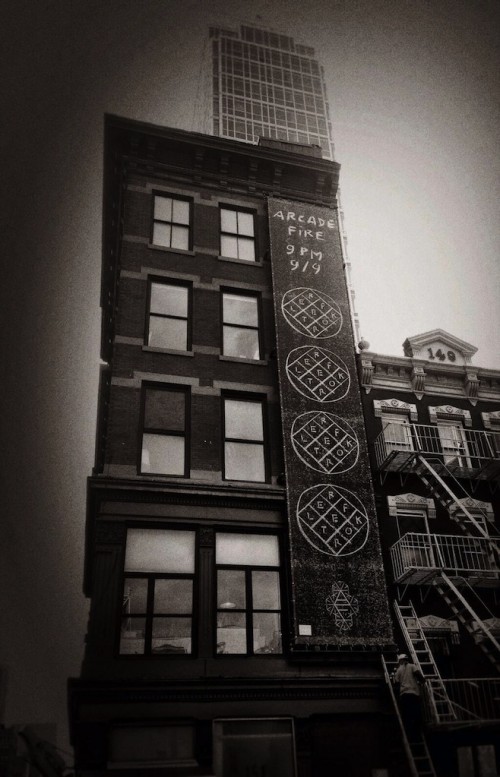
But in between these two releases, other artists elected for a different approach. Canadian band Arcade Fire embarked on a two month-long campaign to promote their fourth album, Reflektor. It started with cryptic graffiti appearing in cities across the globe, with the messages slowly unveiling a more and more details about the album. Then, going under the pseudonym of The Reflektors, they released a 15-second snippet of a song on Spotify in September. By October, when the album finally came out, the promotional campaign had been as meticulous, ambitious and successful as any seen before it.

Daft Punk elected for a similarly-grandiose approach to their campaign. After three months of snippets of the new album, including clips on Saturday Night Live, Coachella Festival and the duo's website, lead single Get Lucky was finally released in April 2013. Their approach to the campaign had been inspired by the past: the gradual rollout of material and large Sunset Boulevard Billboards. Like all of the other albums mentioned here, Random Access Memories shifted thousands of units and debuted at the top of album charts across the world.

The difference between the promotional campaigns of the four of the biggest-selling records of the year was huge, and it's a contrast that hasn't been seen before. Although we saw a huge variety of different styles and genres trouble the mainstream in 2013, one thing remained consistent: albums aren't selling as well as they used to. The apparent determination of artists to break the mould of traditional promotional campaigns is a striking change from previous years.
Whilst we're unlikely to see million-selling albums again, something that was commonplace until the 90s, what is clear is that artists are having to find new and enterprising ways to deal with the proliferation of music piracy. To sell more records and be a greater success, some have plumped for massive marketing campaigns, others have chosen to do absolutely nothing in the way of promotion. Sometimes, less is more.
It's a promising sign that artists aren't resting on their laurels and are reacting accordingly to the slump in the music industry. 2014 may tell us whether the biggest artists on the planet decide to continue this trend and avoid the traditional marketing techniques, or go down the well-trodden path once again.
Follow @AlbumAWeek
To be the first to hear the latest album of the week on the blog, simply enter your email address in the box to the right (and up a little!) of here.
However, the standout trend of the year had to be the the contrast in how major artists decided to promote their new releases. Whilst the majority elected to pursue the familiar channels, some of the biggest names in the business shocked the world with their novel promotional campaigns.
The year was bookended by surprise releases from two artists. On this day in 2013, his birthday, David Bowie brought the internet to a standstill by unveiling the video for new single 'Where Are We Now?' without any prior warning. Whilst rumours of ill-health circled in the years prior to the release, the abrupt return to action meant Bowie was rewarded with his first number one album in twenty years, since 1993's Black Tie White Noise.
Perhaps the ploy influenced another global popstar, for on December 13, 2013, Beyonce dropped her fifth studio album without warning. Despite spending the year rejecting claims that the album was in progress, the bombshell caused 1.2 million tweets in just twelve hours and propelled it to the top of the album charts all over the world, selling 600,000 copies in three days. Two unorthodox album releases with no promotion, and two remarkably successful records.
But in between these two releases, other artists elected for a different approach. Canadian band Arcade Fire embarked on a two month-long campaign to promote their fourth album, Reflektor. It started with cryptic graffiti appearing in cities across the globe, with the messages slowly unveiling a more and more details about the album. Then, going under the pseudonym of The Reflektors, they released a 15-second snippet of a song on Spotify in September. By October, when the album finally came out, the promotional campaign had been as meticulous, ambitious and successful as any seen before it.
Daft Punk elected for a similarly-grandiose approach to their campaign. After three months of snippets of the new album, including clips on Saturday Night Live, Coachella Festival and the duo's website, lead single Get Lucky was finally released in April 2013. Their approach to the campaign had been inspired by the past: the gradual rollout of material and large Sunset Boulevard Billboards. Like all of the other albums mentioned here, Random Access Memories shifted thousands of units and debuted at the top of album charts across the world.

The difference between the promotional campaigns of the four of the biggest-selling records of the year was huge, and it's a contrast that hasn't been seen before. Although we saw a huge variety of different styles and genres trouble the mainstream in 2013, one thing remained consistent: albums aren't selling as well as they used to. The apparent determination of artists to break the mould of traditional promotional campaigns is a striking change from previous years.
Whilst we're unlikely to see million-selling albums again, something that was commonplace until the 90s, what is clear is that artists are having to find new and enterprising ways to deal with the proliferation of music piracy. To sell more records and be a greater success, some have plumped for massive marketing campaigns, others have chosen to do absolutely nothing in the way of promotion. Sometimes, less is more.
It's a promising sign that artists aren't resting on their laurels and are reacting accordingly to the slump in the music industry. 2014 may tell us whether the biggest artists on the planet decide to continue this trend and avoid the traditional marketing techniques, or go down the well-trodden path once again.
Follow @AlbumAWeek
To be the first to hear the latest album of the week on the blog, simply enter your email address in the box to the right (and up a little!) of here.
Sunday, 5 January 2014
Album of the Week #7
Artist: Moby Grape
Album: Moby Grape
Year: 1967
Label: Columbia
I hate the feeling of being too stuffed after eating a meal. Sure, the steak was fantastic, but did you really need to serve all of those dressings too? Sometimes it's best to serve as much as you need, enjoy all of it, and stop punishing yourself by scraping the last few sprouts into your mouth hours after you started eating. Let's be honest, you probably stopped enjoying the meal after twenty or thirty minutes anyway.
Take another example of this. Emerson, Lake & Palmer's 1974 live album, Welcome Back, My Friends, to the Show That Never Ends...Ladies and Gentlemen, Emerson, Lake and Palmer. I feel stuffed after reading that album title alone. It was a trifold (luckily, that term never became a word) album. Arguably the most ridiculous album ever released, these 109 minutes of pure self-indulgence leave the listener feeling a little nauseous afterwards. It's too long. Too much hair. Too many keyboard solos. Too many guitar solos. Too many oboe solos. Too many sprouts.
So it's quite amazing that just seven years prior to Emerson, Lake and Palmer officially hurling themselves up their own arses, we had none of this needless self-indulgence. It was just the good stuff, and nothing more. 1967 in particular was a stellar year for album releases - The Beatles, The Velvet Underground, The Jimi Hendrix Experience, The Doors and Love all released career-defining efforts - so in a sense, it's no wonder that Moby Grape's eponymous debut album might have slipped under the radar in recent years.
Twenty nine minutes and twenty three seconds is all Moby Grape needed to make a classic album. They were a band in the truest sense, fostering the aesthetics of their other 60s contemporaries not just in sound, but also in the fact that all five band members wrote songs for the album. It's a collaborative effort that recalls the DIY spirit of the decade.
As you might imagine from a 60s album heralding from the San Francisco scene of the time, you can draw parallels with the likes of Jefferson Airplane and Buffalo Springfield (Skip Spence, one of the Moby Grape guitarists, was the original drummer for Jefferson Airplane). Together with Spence, the other two guitarists, Peter Lewis and Jerry Miller, combined in a way that was pretty much unseen at the time - only Buffalo Springfield's three guitar-pronged approach could light a candle to it.
The album kicks off with furious 60s rock 'n' roll (Hey Grandma) and rattles through songs with similar vibes throughout. It manages to capture a moment in time expertly - if you want the signature sound of this fabled decade, here it is. Most songs come and go in the blink of an eye, complete with that woozy, laid-back vibe throughout. And at 3.13, Changes is the longest song on the album. No bloated song structures or extended solos here. Moby Grape only give you what you need.
The highpoint of the album arrives early on, in the majestic 8.05. A yearning call for a lost love, it's probably been on hundreds of those compilations of the best songs of the decade, with good reason. It's not forced, it's delicate, and nothing here is being forced upon you. There's nothing unnecessary on this album. Because, after all, who really enjoys sprouts anyway?
Follow @AlbumAWeek
To be the first to hear the latest album of the week on the blog, simply enter your email address in the box to the right (and up a little!) of here.
Album: Moby Grape
Year: 1967
Label: Columbia
I hate the feeling of being too stuffed after eating a meal. Sure, the steak was fantastic, but did you really need to serve all of those dressings too? Sometimes it's best to serve as much as you need, enjoy all of it, and stop punishing yourself by scraping the last few sprouts into your mouth hours after you started eating. Let's be honest, you probably stopped enjoying the meal after twenty or thirty minutes anyway.
Take another example of this. Emerson, Lake & Palmer's 1974 live album, Welcome Back, My Friends, to the Show That Never Ends...Ladies and Gentlemen, Emerson, Lake and Palmer. I feel stuffed after reading that album title alone. It was a trifold (luckily, that term never became a word) album. Arguably the most ridiculous album ever released, these 109 minutes of pure self-indulgence leave the listener feeling a little nauseous afterwards. It's too long. Too much hair. Too many keyboard solos. Too many guitar solos. Too many oboe solos. Too many sprouts.
So it's quite amazing that just seven years prior to Emerson, Lake and Palmer officially hurling themselves up their own arses, we had none of this needless self-indulgence. It was just the good stuff, and nothing more. 1967 in particular was a stellar year for album releases - The Beatles, The Velvet Underground, The Jimi Hendrix Experience, The Doors and Love all released career-defining efforts - so in a sense, it's no wonder that Moby Grape's eponymous debut album might have slipped under the radar in recent years.
Twenty nine minutes and twenty three seconds is all Moby Grape needed to make a classic album. They were a band in the truest sense, fostering the aesthetics of their other 60s contemporaries not just in sound, but also in the fact that all five band members wrote songs for the album. It's a collaborative effort that recalls the DIY spirit of the decade.
As you might imagine from a 60s album heralding from the San Francisco scene of the time, you can draw parallels with the likes of Jefferson Airplane and Buffalo Springfield (Skip Spence, one of the Moby Grape guitarists, was the original drummer for Jefferson Airplane). Together with Spence, the other two guitarists, Peter Lewis and Jerry Miller, combined in a way that was pretty much unseen at the time - only Buffalo Springfield's three guitar-pronged approach could light a candle to it.
The album kicks off with furious 60s rock 'n' roll (Hey Grandma) and rattles through songs with similar vibes throughout. It manages to capture a moment in time expertly - if you want the signature sound of this fabled decade, here it is. Most songs come and go in the blink of an eye, complete with that woozy, laid-back vibe throughout. And at 3.13, Changes is the longest song on the album. No bloated song structures or extended solos here. Moby Grape only give you what you need.
The highpoint of the album arrives early on, in the majestic 8.05. A yearning call for a lost love, it's probably been on hundreds of those compilations of the best songs of the decade, with good reason. It's not forced, it's delicate, and nothing here is being forced upon you. There's nothing unnecessary on this album. Because, after all, who really enjoys sprouts anyway?
Follow @AlbumAWeek
To be the first to hear the latest album of the week on the blog, simply enter your email address in the box to the right (and up a little!) of here.
Tuesday, 31 December 2013
Feature: The Best Gig of 2013
As a post-Christmas treat, here's a special feature on my favourite gig of the year: Arcade Fire at London's Roundhouse.
12th November 2013. Just ten minutes had elapsed, yet I had already bought a Pete Doherty t-shirt, my mate had done likewise with an Amy Winehouse number, and now I was in advanced negotiations to purchase a top hat. Yep, I could only be in Camden. The trendy North London suburb is home to the famous Roundhouse venue, which would be hosting Canada's finest tonight: Arcade Fire. Or, 'The Reflektors', as it had been billed. On arrival, I was actually slightly disappointed to find a genuine band called The Reflektors hadn't pulled off the greatest marketing ploy since somebody decided to price an item at 99p. Ah well, I would have to make do with seeing one of the biggest bands in the planet at the 3,000 capacity venue instead.
I was one of the lucky few to have snagged a golden ticket to the gig, after the customary event of waking up at the crack of dawn and bashing refresh like a crazed maniac. Although, I say that, but I actually found this to be one of the easiest gigs to get tickets to - my refresh count must have been in single figures before racing through the purchase page. But judging by the Twitter reaction afterwards, I was pretty much on my own in that respect. Make no bones about it: this was a hugely in-demand gig, and I had secured a ticket to it pretty comfortably. Naturally, I immediately felt vastly superior to other people.
My innate fear of pint prices in London came to the fore in the first drinking establishment that we frequented. £4.20 a pint!! The night was threatening to be totally derailed, thanks to a crippling state of sobriety. But having turned down the opportunity of looking like a complete bellend by buying and wearing a bloody top hat, the day (night) was miraculously saved! Happy Hour 5-7pm? 50% off all drinks? We had found our Camden watering hole and all was well in the world once again.
But I should probably stop prattling on about top hats and affordable pints- I'm sure you want to know what the band were actually like. On to the gig then. Scanning the sizeable queue to the Roundhouse, you could already sense that the atmosphere here was a little different to normal...thousands of people in suits and fancy dress does that, I suppose. For a cold, wet Tuesday night in London, people were in great spirits - and with good reason, too.
On entering the plush surroundings of the Roundhouse, it was really something else. This was going to be special. People had really gone to town on their fancy dress and I especially looked absolutely fantastic in my suit. Then, I noticed that a disguised Win Butler was singing lead for the Mariachi band upstairs. There was free face painting by the bar. Arcade Fire mystifyingly seemed to get some stick for the mandatory dress code idea, but from what I experienced, it only contributed to a uniquely jovial atmosphere.
The set itself was Reflektor-heavy, as you might expect. Kicking off with the title track, each and every cut off the new record received a rapturous reception. The band really seem to have nailed these songs live already- if anything, they come across better in these surroundings. Whether they will translate as well to festival headline slots is another question, but in an intimate venue such as this, you can really start to 'get' Reflektor.
The older songs that were interspersed with the newer material - Neighbourhood #3 (Power Out), Haiti and Sprawl II - went down similarly well. Yet the best-received songs had to be the sweaty, pogoing Normal Person and Here Comes the Night Time, which was accompanied by a mass explosion of confetti. This was half disco hall, half Haitian festival.
For a band who have sometimes been accused of taking themselves too seriously - there are, after all, a heck of a lot of doomsday lyrics in their repertoire - this marked a new chapter in their career and a noticeable shift in their sound, look and attitude. Arcade Fire are back, and this time, they're going to enjoy themselves.
The set itself was Reflektor-heavy, as you might expect. Kicking off with the title track, each and every cut off the new record received a rapturous reception. The band really seem to have nailed these songs live already- if anything, they come across better in these surroundings. Whether they will translate as well to festival headline slots is another question, but in an intimate venue such as this, you can really start to 'get' Reflektor.
The older songs that were interspersed with the newer material - Neighbourhood #3 (Power Out), Haiti and Sprawl II - went down similarly well. Yet the best-received songs had to be the sweaty, pogoing Normal Person and Here Comes the Night Time, which was accompanied by a mass explosion of confetti. This was half disco hall, half Haitian festival.
For a band who have sometimes been accused of taking themselves too seriously - there are, after all, a heck of a lot of doomsday lyrics in their repertoire - this marked a new chapter in their career and a noticeable shift in their sound, look and attitude. Arcade Fire are back, and this time, they're going to enjoy themselves.
Subscribe to:
Posts (Atom)